Log Burner Installation Cost With No Chimney — Twin-Wall Flue Guide (2026)
UK no-chimney installs typically cost £4,600–£7,300 — £1,800–£3,500 more than a standard install with an existing chimney. Here’s the full breakdown.
The short answer
A complete UK no-chimney install in 2026 — twin-wall flue, mid-range Ecodesign stove, hearth, register plate, CO alarm, and the applicable compliance route — costs £4,600–£7,300 total. Two-storey houses sit toward the upper end; single-storey homes, shorter flue runs, and external (rather than internal) routes land lower.
The premium over a standard existing-chimney install is £1,800–£3,500, almost entirely driven by the cost of fabricating a flue from scratch using twin-wall insulated stainless steel pipe.
Get your no-chimney estimate
The calculator pre-selects the no-chimney scenario when you pick it on step 4. Personalised low/mid/high range in under 60 seconds.
Open the calculatorWhat is a twin-wall flue?
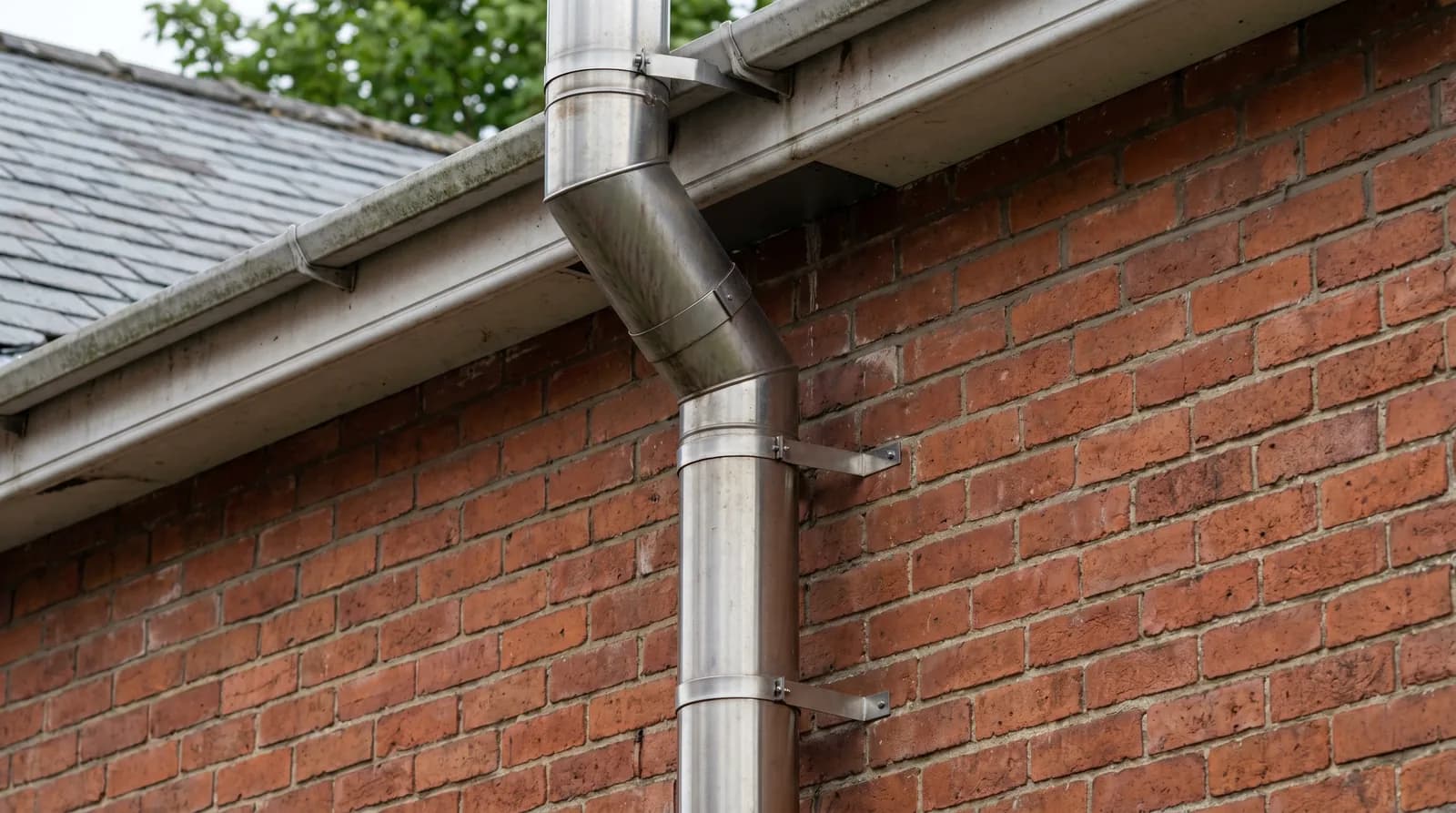
Twin-wall flue is a two-layer insulated stainless steel pipe engineered to safely vent combustion gases when there’s no existing masonry chimney. The outer skin stays cool enough to sit close to combustibles; the inner liner can handle 600°C+ continuous flue temperatures.
A complete system comprises straight lengths (typically £90–£120 per metre supply only), 45° or 90° tees, wall support brackets (every 1.8–2m on external runs), a weather collar, storm collar, and an anti-downdraft cowl at the top. For a UK two-storey house you’ll need 5–7 metres of flue minimum, often more if the building is tall or the flue must clear a nearby roof ridge.
Itemised no-chimney cost breakdown
| Item | Range | Notes |
|---|---|---|
| Twin-wall flue (10m installed) | £1,800 – £3,500 | Pipe at £90–£120/m supply only, plus tees, brackets, weather collar, storm collar, and cowl. |
| Stove unit (entry / mid / premium) | £500 – £8,000+ | Entry Ecodesign from £500; mid £1,500–£3,000; premium £3,000+. |
| Hearth | £150 – £1,500 | Prefab slate/granite £150–£600. Bespoke £500–£1,500. |
| HETAS labour (twin-wall) | £1,000 – £2,500 | 1–2 days single-storey; 2–3 days for two-storey internal runs. |
| Register / floor plate + CO alarm + sweep | £225 – £600 | Floor plate, fire-stop, BS EN 50291 CO alarm. |
| VAT treatment | Included where applicable | Confirm whether each installer quote includes VAT and whether the installer is VAT registered before comparing totals. |
Internal vs external flue route — which is cheaper?
Internal route: the flue passes up through ceilings and floors to exit at the roof. Aesthetically tidier but adds boxing, plasterboard, fire-stopping, and often joinery for making good — a typical extra of £500–£1,500 on top of the twin-wall materials. Required where you can’t exit externally.
External route: the flue exits at the back of the stove and runs up the outside of a gable wall to clear the roof. Simpler to install, no internal disruption. But brackets every 1.8–2m create a very visible vertical pipe — Reddit r/HousingUK regulars consistently report it’s more obvious than marketing photos suggest.
The 2.3m adjacent-building check
Under England’s Approved Document J Diagram 17, a flue outlet within 2.3 metres horizontally of an adjoining or adjacent building should be at least 600mm above every part of that building within the same distance. Its clearances from its own roof and nearby openings also apply.
Measure from the proposed outlet: the gap between two buildings alone does not determine the result. A tall adjacent house can make the flue materially longer, but it is not a blanket instruction to match the main roof height. Wales publishes a separate Approved Document J; Scotland and Northern Ireland use different guidance.
England’s Part J guidance — what the design must verify
These are common English guidance points. Wales has its own Approved Document J, and Scottish and Northern Irish projects must use their respective national documents and approval routes.
- Flue height and outlet: commonly at least 4.5m from the appliance outlet. At or within 600mm of the ridge, the outlet should be at least 600mm above it. Elsewhere, Diagram 17 requires 2,300mm horizontal clearance from the nearest weather surface and either 1,000mm above the intersection or at least as high as the ridge.
- Distance to combustibles: a single-skin flue pipe needs clearance of at least 3× its diameter — so a 150mm (6”) flue requires ≥450mm clearance to combustibles. Twin-wall has its own (tighter) clearances per manufacturer.
- CO alarm: provide a suitable alarm with a new fixed combustion appliance and position it under the applicable national guidance and the alarm manufacturer’s instructions.
- Hearth: non-combustible, minimum 840×840mm for freestanding stoves. 12mm thick if stove certified to keep base under 100°C, otherwise 125mm constructional hearth.
What homeowners regret after a no-chimney install
Recurring patterns from r/DIYUK and r/HousingUK threads on no-chimney installs:
- External flue is more visible than marketing photos suggest
- Scaffolding for first-floor exit not included in initial quote (+£300–£800)
- Quote covers materials only, not fire-stopping, hearth, or certification
- Combustible-clearance shortcuts from budget installers — the #1 reason a HETAS inspector deems an install “immediately dangerous”
Recommended stoves for no-chimney installs
Stoves rated 5kW or below don’t require an additional permanent air vent in most pre-2008 UK homes — a sweet spot for the no-chimney scenario:
- Charnwood C-Four — £1,259, 5kW, single-lever Quattroflow, 10-year warranty when registered. The most defensible UK-made mid-market pick. Full Charnwood guide →
- Hunter Herald 5 Eco — ~£1,165, 5kW, optional back-boiler integration, 10-year warranty.
- Stovax Stockton 5 — ~£1,210 street (RRP £1,609), triple-air control, the UK’s most-installed mid-market wood-burner per Reddit consensus.
- Clearview Pioneer 400 — from £1,740, 5kW, multifuel. UK-made; verify current Ecodesign / clearSkies status with your installer. Clearview context →
Get free log burner installation quotes
Postcode + scenario + budget. We pass your enquiry to installation businesses serving your area, and they contact you with quotes. Free, no obligation.
Get quotesFrequently asked questions
Can I install a log burner without a chimney?
Yes. A twin-wall insulated flue system creates a flue from scratch — routed internally through the building, or up the gable wall externally. Total installed cost typically runs £4,600–£7,300 for a two-storey UK house.
How much extra does a twin-wall flue cost?
Adds £1,800–£3,500 versus a standard install with an existing chimney. Twin-wall flue pipe runs £90–£120 per metre supply-only; a two-storey kit including tees, brackets, weather collar and cowl is £800–£1,500 in materials alone before labour.
How tall does the flue need to be?
English and Welsh Approved Document J guidance commonly uses a minimum 4.5m flue height from the appliance outlet, with termination determined by roof geometry and nearby openings. Manufacturer instructions and site conditions can require more. Scotland and Northern Ireland publish separate national guidance.
Can the flue go through a flat roof?
Potentially. A flat-roof penetration needs a compatible flashing system and the outlet clearances for the applicable jurisdiction. In England, Diagram 17 treats a roof below 10° as flat and uses separate tests for the weather surface, openings within 2.3m and adjacent buildings. The appliance and flue manufacturer can require more.
Do I need planning permission for an external twin-wall flue?
Check the planning rules for the property's nation and council before work starts. In England, some chimney or flue alterations can be permitted development subject to limits, but listed buildings, designated land, flats and prominent elevations can need consent. Building approval and planning permission are separate checks.
Will a no-chimney install affect my house insurance?
Tell the insurer before installation and ask what evidence it requires. In England and Wales, a HETAS certificate can evidence work notified through the Competent Person Scheme; Scotland and Northern Ireland use different approval records. Coverage depends on the policy terms, not HETAS status alone.
How long does a no-chimney install take?
Single-storey: 1 day. Two-storey internal route: 2–3 days. The labour element is mostly flue routing and fire-stopping — the stove itself sits in under an hour.