How to Light a Log Burner — UK 2026 Step-by-Step Guide
The top-down method is the modern UK standard. Cleaner burn, less smoke, less user intervention than the traditional bottom-up. 8 steps, plus how to handle a cold chimney that won’t draw.
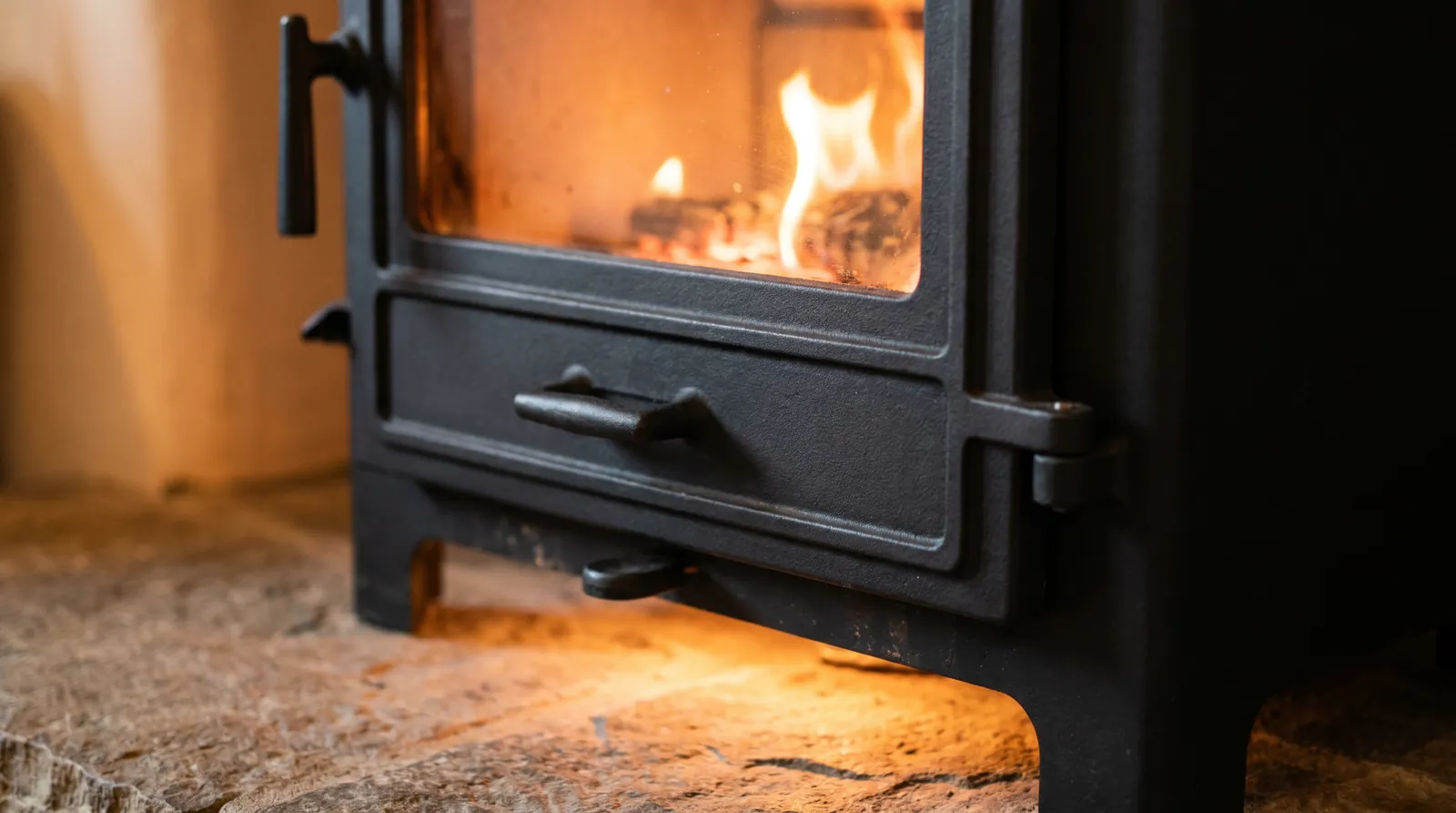
What you’ll need
- 2-3 large logs (kiln-dried, ≤20% moisture). Use a moisture meter to confirm
- Split kindling (softwood preferred — catches faster than hardwood)
- 1-2 firelighters (natural wood wool + wax preferred over paraffin)
- A few sheets of newspaper
- Stove thermometer — magnetic top-mount works fine
The 8-step top-down method
Step 1
Open the air vents fully
Open both primary and secondary air vents fully. This delivers maximum air to support the fire establishing.
Step 2
Lay the bottom logs
Place 2-3 large logs in the firebox base, parallel to each other, with a small gap between them. Don’t overfill — leave plenty of room above for kindling and airflow.
Step 3
Add kindling on top, perpendicular
Stack split kindling (softwood works best) crisscrossing the logs. Build a small open structure with air gaps — don’t pack tightly. Aim for ~150-200mm of kindling depth.
Step 4
Place firelighter on top
Position a natural firelighter (wood wool + wax preferred) on top of the kindling, then a few crumpled sheets of newspaper or fine kindling at the very top.
Step 5
Warm the chimney (cold flue)
Before lighting the main fire, roll up a sheet of newspaper, light it, hold inside the flue (well above the firebox) for 30-60 seconds. This warms the air column and establishes upward draught.
Step 6
Light the firelighter at the top
Light the firelighter and newspaper at the very top. The fire burns downward through the kindling and ignites the logs from above. Close the door but leave it slightly open (5-10mm) for the first 60 seconds to support draught.
Step 7
Close the door, watch the burn
Close the stove door fully once the kindling is well alight. The fire should establish into the logs within 5-10 minutes. Keep both air vents fully open during this phase.
Step 8
Adjust air vents as fire establishes
Once the fire is established and the stove thermometer reads 150-200°C, gradually close the primary air vent. Leave the secondary vent open at 30-50% for clean-burn through the main burn phase.
Top-down vs bottom-up
The traditional bottom-up method (kindling at base, logs on top) produces more smoke during the early burn phase and gives less control as the fire establishes. UK stove forums and HETAS-registered installers consistently recommend top-down for these reasons:
- Cleaner combustion: the fire pulls air down through the kindling, then through the logs — the air is preheated before reaching the main fuel
- Less smoke in the room: the warm-flue effect develops before the main fuel is engaged
- Less user intervention: the fire establishes itself without needing to add more kindling as it grows
- Cleaner glass: less particulate output means clear glass even through the lighting phase
Common mistakes
- Burning wet wood: anything above 20% moisture won’t catch cleanly. Verify with a moisture meter
- Closing air vents too early: wait until the stove thermometer reads 150°C before reducing primary air. Close the primary first, leave the secondary at 30-50%
- Skipping the chimney-warm step: cold flues backdraft. The 30-60 second newspaper torch in the flue establishes draught before main lighting
- Stacking kindling too tightly: kindling needs air gaps to catch quickly. Crisscross structure with 5-10mm spacing
- Using treated wood, MDF, painted timber, or pallets: chemicals damage the stove and release toxic fumes. Use clean, untreated wood at 20% moisture or less
- Slumbering the stove overnight: low- temperature burns deposit creosote and shorten flue liner life. Better to let the fire die down naturally
What to do if the fire keeps going out
- Check the wood with a moisture meter. ≥20% moisture is the #1 cause of failed lights
- Check the air vents are fully open during the first 10 minutes
- Warm the chimney with a newspaper torch before lighting
- Use more kindling next time — fires fail when the fuel runs out before the logs catch
- If problem persists, get the chimney swept and inspected — blocked or deteriorated flues stop draught
Pair with these
- Stove thermometer — essential for vent control. £15–£28. See thermometer guide
- Moisture meter — £10–£25. See moisture meter guide
- Best firewood guide: ash and oak are the UK consensus picks. Full firewood guide
- Kindling and firelighters: ~50kg per UK winter. See kindling guide
If something goes wrong
- Smoke comes into the room when lighting — cold-flue backdraft. See smoke-smell troubleshooting.
- Glass blackens within hours — almost always wet wood or air vents closed too early. See why glass goes black.
- Stove feels under- or over-powered — sizing mismatch. See sizing guide.
Frequently asked questions
What’s the best way to light a log burner?
The top-down method is the modern UK standard: stack 2-3 large logs at the bottom, then smaller split kindling perpendicular on top, then natural firelighter and a few twists of newspaper at the very top. Light from the top. Fire burns downward through the stack, drawing through the kindling. Cleaner burn, less smoke, less user intervention than bottom-up.
Why isn’t my fire catching?
Top three causes: (1) wet wood — fundamentally won’t burn cleanly above 20% moisture; (2) blocked or backdrafting flue — chimney needs warming with a torch of newspaper before main lighting; (3) insufficient air supply — primary air vent fully open until the fire is established.
How long should I keep the air vents open?
First 10-15 minutes after lighting: all air vents fully open. As temperature rises (look at the stove thermometer): close the primary vent first, leaving secondary open for clean-burn. For a typical UK stove: primary closed and secondary at 30-50% during the main burn phase.
Why does smoke come into the room?
Backdraft on a cold flue. The chimney needs warming before the main fire is established — roll up a sheet of newspaper, light it, hold inside the flue (well above the firebox) for 30-60 seconds. This warms the air column and establishes upward draught. Try lighting again with the chimney warmed.
What’s the difference between top-down and bottom-up lighting?
Top-down: kindling at top, logs below — fire burns downward. Modern UK preference for cleaner combustion. Bottom-up: kindling at bottom, logs on top — fire burns upward. Traditional method, faster heat but more smoke and less even burn. Try top-down once; most UK owners switch.